What Real Longevity Medicine Looks Like: Care at Concierge Medicine of Cincinnati

The Risk Assessment Most Longevity Clinics Skip
Before starting hormone therapy, was her breast cancer risk ever formally assessed? CMoC clinicians walk through the risk-stratification step most longevity clinics skip entirely.
Medically reviewed by Lisa Larkin, MD, FACP, MSCP, IF, CEO and founder of Ms.Medicine and Concierge Medicine of Cincinnati
Last updated: July 2026
A 52-year-old woman walks into a wellness clinic and walks out with a compounded GLP-1 prescription and a hormone "optimization" protocol. No one asked about her family history of breast cancer. No one ran a validated risk model. No one mentioned that she might already meet criteria for high-risk screening. She simply enrolled, and the protocol followed. I have seen this woman in my practice, and I want to talk about what happens to her next.
Across Cincinnati and around the country, "longevity medicine" is having a moment. Everyone is talking about how to biohack aging. The conversation has shifted to data and metrics: your watch, your ring, your wearables. High-cost longevity clinics and membership programs are opening everywhere, and venture capital and private equity are pouring in because they see a business opportunity. But this obsession with optimization has pulled attention away from what we already know drives a longer life. A largely plant-based diet. Regular exercise. Limited alcohol. Not smoking. Good sleep. A healthy body weight. Strong relationships and community. The evidence for these has been sitting in front of us for decades.
If you are exploring longevity services, here is a question worth sitting with. Does solid data confirm that what you are being offered is safe and effective? And if you develop a complication, is the clinic capable of managing it? Will someone there take your call at 2 am?
What Longevity Medicine Actually Is
Longevity medicine is an emerging and still-evolving discipline focused on early detection, prevention, and personalized approaches to extend healthy lifespan. There is no board certification for it. Historically, internal medicine and family medicine were the specialties built around disease prevention and long-term health. Two things got in the way.
The first is a financial model in which insurance reimburses procedures and things done to patients while disincentivizing preventive care. The second is a delivery model that gives primary care physicians less than 15 minutes per patient. Research published in the American Journal of Public Health estimated that delivering all guideline-recommended preventive care alone would require roughly 26 hours per day for a physician with an average patient panel, which tells you everything about why thorough preventive care is nearly impossible in a traditional practice. That is one of the central reasons I left academic medicine in 2016 to found a concierge direct-care practice, so I could have the time to actually practice whole-person preventive care.
CMOC has never marketed itself as a longevity practice, and we never will. But our focus has always been longevity medicine in its truest sense: grounded in data, evidence-based clinical guidelines, and comprehensive care. We are a longitudinal preventive care practice with particular expertise in women's health and menopause, built to care for women and men across an entire lifespan. We do not just want to see you at midlife when you are healthy. Our priority is a relationship that lasts, focused on both preventing disease and managing it when it arrives. I would argue that CMOC is a longevity medicine practice, and specifically a women's health longevity practice, even though I prefer not to use that label given what it has come to mean commercially. CMOC is your medical home.
Why the Distinction Between a Medical Home and a Clinic Matters
Practices marketing themselves as longevity clinics or hormone-and-weight-loss medi-spas operate on a fundamentally different business model. It is built around selling diagnostic testing, compounded medications, peptides, and supplements not covered by insurance. Our model is built around being a medical home and providing real care. What you pay for at CMOC is knowing there is a place to go when you are ill, when you have a complex issue and need a second opinion, when you have an after-hours emergency, when you need in-home care or a family meeting, or when you develop a complication from something that was prescribed. We are not the kind of practice that goes hands-off the moment a real problem arises from something we recommended.
Return to that 52-year-old woman. Before starting hormone therapy, was her breast cancer risk ever formally assessed? Family history, breast density, genetic risk factors, a validated model like Tyrer-Cuzick or the NCCN framework? Was she told whether she is high risk, and that she might meet criteria for risk-reducing medication? Was high-risk screening ordered? Or was she simply started on a protocol because she enrolled? Most longevity and wellness clinics skip this step. Risk stratification takes time, clinical training, and a relationship with the patient that a one-time optimization consult does not allow for.
Then, at 2am, she develops severe abdominal pain, or unexpected vaginal bleeding, which in a postmenopausal woman always warrants evaluation. Who does she call? The clinic that sold her the protocol typically has no after-hours line, no one who knows her history, and no relationship with a hospital or specialist who can see her urgently. She is routed into the emergency system as a stranger, working from a thin and unfamiliar medication list, while the people who started her on these therapies have no role and often no visibility in what happens next.
Now imagine that same woman gets a mammogram that comes back abnormal and is diagnosed with breast cancer. Is the longevity clinic helping her navigate that diagnosis? Coordinating with her oncologist? Reassessing whether her hormone therapy needs to change? Managing her care through treatment and into survivorship? In most cases, no. That was never the relationship. She is on her own to assemble a care team from scratch at the exact moment she most needs someone who already knows her.
A CMOC patient facing this same path has a different experience. Before we start hormone therapy, we assess individual breast cancer risk using validated tools and a full history. We know her medications and her risk factors. If something goes wrong, we help her get to the right level of care immediately, coordinate with specialists, and stay involved through diagnosis, treatment, and beyond, because that ongoing relationship was the model from day one, not an afterthought. We provide this care for all of our patients, including our male patients. That is the difference between a medical home and a transaction.
What the Clinics Are Selling
What you are hearing about in the news and on social media is a different kind of longevity medicine. Growth has been explosive, both in brick-and-mortar clinics and online membership programs, built around advanced diagnostics that sound cutting-edge:
Biological age testing
VO2 max testing and oxidative stress panels
Extensive micronutrient and gut microbiome testing
Lifestyle genetic testing and advanced hormone panels
Total body MRIs and coronary CT angiograms
Based on these results, the same clinics frequently recommend and sell supplements, parasite cleanses, compounded hormone optimization packages, microdosed compounded GLP-1s, peptide stacks, IV vitamin and NAD therapy, exosomes, stem cell infusions, plasma exchange, red light therapy, and hyperbaric oxygen. Each is promised to slow aging or extend life.
These programs typically charge a membership fee for access, and the real revenue comes from the services recommended after testing. Because they carry a high price tag, they project exclusivity, with the implication that if it costs more, it must be better medicine. Remember that good marketing does not mean good medicine. Price is not evidence. The total-body MRI is a useful example: studies of whole-body MRI screening in people without symptoms have found that a meaningful share of scans turn up incidental findings that lead to further testing, most of which prove not to be cancer, generating anxiety, cost, and downstream procedures without a demonstrated survival benefit.
Before investing in any of these programs, ask two things. Is there solid human evidence that this therapy is safe and effective? And is the time, money, and energy pulling me away from the proven, unglamorous habits that actually extend healthy life, or causing me to skip the screenings and preventive care that do have data behind them?
The Unglamorous Truth About What Extends Life
Here is what is uncomfortable for an industry built on novelty. The interventions with the strongest evidence for extending healthy lifespan are not new, exclusive, or expensive. Consider what the data actually supports:
Regular physical activity
Not smoking
Adequate sleep
Limiting alcohol
Maintaining a healthy weight
Blood pressure and cholesterol management
Up-to-date cancer screening and vaccinations
For many midlife women, appropriately timed and evidence-based menopausal hormone therapy
None of this requires a biological-age panel or a peptide stack. A large analysis of lifestyle factors found that adults who maintained several low-risk habits, including never smoking, a healthy weight, regular activity, moderate alcohol use, and a healthy diet, lived substantially longer than those who maintained none. Most of these interventions are already part of a comprehensive CMOC visit.
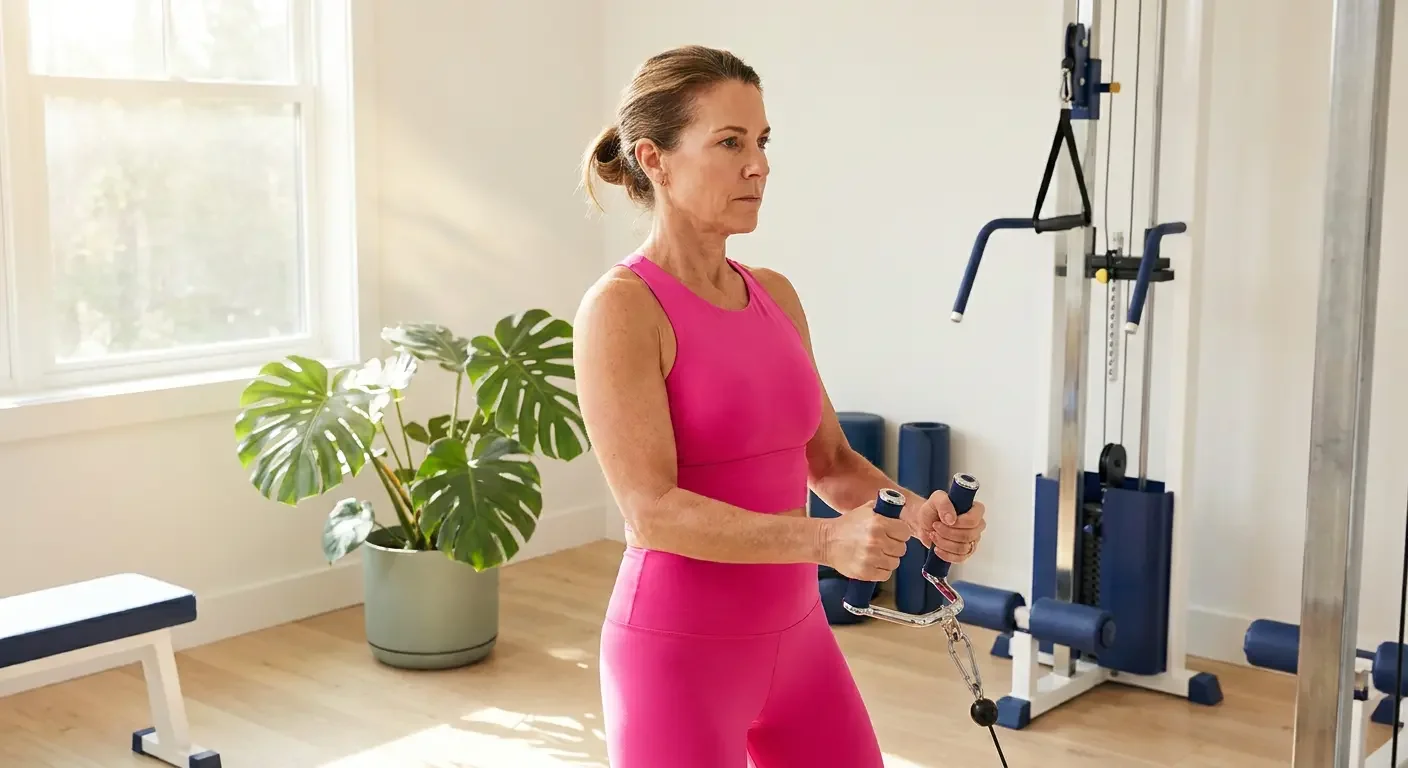
What Actually Extends Healthy Lifespan
No peptide stack required. Our clinicians lay out the unglamorous, evidence-backed habits that actually extend healthy lifespan — and why CMoC builds its whole practice around them.
The Difference Between Testing and Care
Many of the diagnostics and therapies offered by longevity clinics are scientifically interesting and may have a role in the future. But today, most are not supported by high-quality evidence showing improved healthspan, reduced disease risk, or better long-term outcomes. Testing alone is not care. Data without context, follow-up, and clinical responsibility does not create health.
Longevity medicine should mean preventing disease, identifying risk early, and managing health over time, using diagnostic testing when it is clinically appropriate and changes medical decision-making, not because it is novel or marketable.
This is exactly how we approach precision diagnostics at CMOC. In a recent webinar on our practice philosophy, I walked patients through the specific tests we have chosen to offer and, just as importantly, the ones we have not. We use validated risk models like Tyrer-Cuzick to assess individual breast cancer risk, because population risk figures tell a woman almost nothing about her own situation. We offer hereditary cancer genetic testing, polygenic risk scoring, continuous glucose monitors, ambulatory blood pressure monitoring, and heart rhythm monitors. Each is selected because it changes a clinical decision, not because it generates revenue. We interpret every result, own the follow-up, and carry the clinical responsibility for what we order. What we do not do, and will never do, is offer or sell compounded GLP-1s, cash-based hormone testing, hormone pellets, or peptides.
Real longevity depends on continuity. Health risks evolve over years, and outcomes improve when physicians know their patients deeply and manage care longitudinally, not episodically around a product.
Three Questions Worth Asking Any Longevity Program, Including Ours
Before you commit to any program, ask the people offering it these three questions.
Continuity or transaction? Is there a relationship that persists when something goes wrong, or does the service end when the invoice is paid?
Evidence or marketing? Is this recommended because trial data shows it changes outcomes, or because it is new and sellable?
Accountable or hands-off? Who is responsible if a complication occurs, and do they have the infrastructure and malpractice coverage to manage it?
Concierge medicine is not about luxury or convenience. It is about accountability, access, and responsibility. Some clinics sell services. CMOC provides care. If your goal is a longer, healthier life, the most effective investment is not unproven diagnostics or therapies. It is evidence-based primary care delivered over time by physicians who take responsibility for your health.
That is what Concierge Medicine of Cincinnati provides across our Mariemont, Kenwood, and Mason locations, and that is what real longevity medicine looks like. If you would like to hear more about how we think about precision diagnostics and preventive care, our full webinar on the practice is available below. If you would like to see this approach for yourself, we welcome you to reach out at 513-760-5511 or visit conciergemedicineofcincinnati.com to learn more or schedule a consultation.