

Cincinnati Women Are Done Accepting Partial Answers for Their Menopause Symptoms
Only 25 percent of women who seek care for menopause-related issues actually receive treatment. In Cincinnati, Concierge Medicine of Cincinnati is working to change that — one thorough, unhurried appointment at a time.
Last updated: May 2026
Something is shifting in how midlife women in Cincinnati think about their health. Women who have spent years cycling through annual appointments, leaving with their questions partially answered and their symptoms loosely categorized as stress or aging, are starting to ask for something different. They want a provider who will sit with them long enough to understand the full picture. They want their symptoms treated as a clinical matter worth addressing, not a natural process to be endured. And increasingly, they are finding that kind of care through concierge medicine practices that specialize in women's health.
Concierge Medicine of Cincinnati, with locations in Mariemont, Kenwood, and Mason, is seeing this firsthand. The women who come through the door are not looking for a quick fix. They are looking for a physician who understands the menopause transition in depth, can help them sort through what is happening in their bodies, and will be available when new questions arise. For many, it is the first time they have had that kind of medical relationship.
The Numbers Behind the Frustration
The gap between how many women experience menopause symptoms and how many receive adequate treatment is striking. According to the Health Care Cost Institute, while 60 percent of women seek medical care for menopause-related issues, only 25 percent actually receive treatment. A 2024 study published in the journal Menopause, the journal of The Menopause Society, found that among women in a primary care setting who reported moderate to very severe hot flashes, fewer than 23 percent had their symptoms documented in their electronic health records.
This is not a matter of women staying silent. It is a matter of the standard primary care structure failing to create the conditions where these conversations can happen meaningfully. Appointments are short. Providers are often undertrained in menopause management. And women who have previously felt dismissed are less likely to keep trying to have the conversation.
The training gap on the provider side is real–only one in five OB-GYNs in the United States reports formal training in menopause. A global analysis of medical textbooks found that 58 percent contained no mention of menopause at all. Women experiencing perimenopause and menopause are not being failed by their own biology. In many cases, they are failing because the healthcare infrastructure was not built with their midlife health needs in mind.
What Perimenopause and Menopause Actually Look Like
Part of the problem is that the public narrative around menopause has historically been reduced to hot flashes, and for many women, that framing does not match their experience. Perimenopause, the transition period that typically begins in a woman's 40s, can last several years before the final menstrual period. The symptoms during this window are wide-ranging and often misattributed:
Irregular sleep and insomnia
Cognitive changes, often described as brain fog or difficulty concentrating
Mood shifts, including increased anxiety or irritability
Fatigue that does not resolve with rest
Changes in weight distribution, particularly around the abdomen
Decreased libido
Joint pain and muscle aches
Heart palpitations
Changes in skin, hair, and vaginal tissue
Many of these symptoms are treated individually by different specialists, or not treated at all. A woman may be told her sleep issues warrant a referral to a sleep clinic, her mood changes warrant an antidepressant prescription, and her weight changes warrant a conversation with a nutritionist. What she rarely receives is a provider who sees all of those symptoms together, understands the hormonal context, and creates a unified care plan.
Why Personalized Care Changes the Outcome
The concierge model addresses the problem of menopause care in a structural way. Longer appointments create the time needed for a full symptom history. A continuous relationship with a single physician means that treatment can be adjusted as the transition progresses and as a woman's life circumstances change. Proactive follow-up replaces the reactive pattern of waiting for a woman to call in crisis.
For women in perimenopause and menopause, the clinical benefit of this kind of care extends beyond symptom relief. The menopause transition is a period of significant health risk if not actively managed. Estrogen's protective effects on bone density, cardiovascular health, and cognitive function decline during this transition. Women who are monitored consistently through this window have the opportunity to address those risks before they become diagnoses.
At Concierge Medicine of Cincinnati, menopause evaluations are not a checkbox on a longer appointment. They are a dedicated clinical process that includes:
A thorough review of current symptoms and how they are affecting daily function
Assessment of relevant health history, including family risk factors for osteoporosis, cardiovascular disease, and metabolic conditions
Laboratory evaluation to understand hormonal status and identify other contributing factors
An individualized treatment plan that may include hormone therapy, non-hormonal options, lifestyle support, and referrals to complementary specialists when appropriate
Ongoing access to your physician as the plan is implemented and adjusted over time
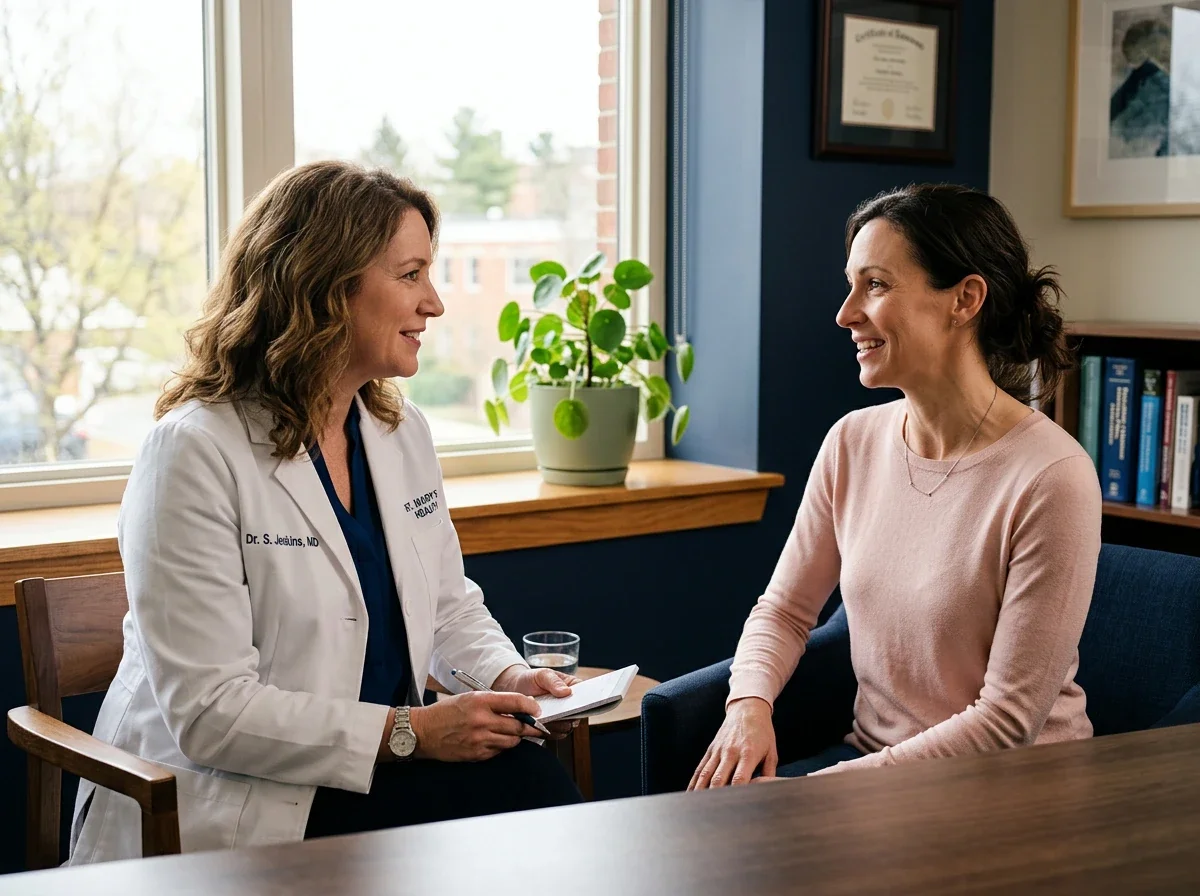
What a Personalized Menopause Evaluation Actually Looks Like
Most women have never had a menopause appointment that felt like enough. At Concierge Medicine of Cincinnati, the evaluation is a dedicated clinical process — not a checkbox at the end of a longer visit. Here is what that looks like in practice.
National Women's Health Week and a Shift in the Standard of Care
The 2026 National Women's Health Week theme, "Prevention, Innovation, and Impact: A New Era in Women's Health," reflects what many women and clinicians have been observing on the ground. There is a growing recognition, supported by research and increasingly by clinical guidelines, that women's symptoms deserve to be taken seriously, documented thoroughly, and treated proactively. The Menopause Society, formerly known as the North American Menopause Society, has been working to increase provider training and update clinical guidance to reflect the current evidence base on hormone therapy and menopause management. This includes reaffirmation that hormone therapy remains an appropriate and effective option for many women within the appropriate clinical window. The updated guidance is giving both physicians and patients a more accurate foundation for treatment conversations. For women in Cincinnati and the surrounding suburbs who have been waiting for this conversation to happen in their own healthcare relationships, the shift is meaningful. They no longer have to accept that their symptoms are simply the cost of aging.
What to Expect When You Reach Out
If you have been experiencing symptoms that feel connected to your hormonal health but have not found adequate answers through your current provider, a personalized menopause evaluation at Concierge Medicine of Cincinnati is designed for exactly that situation. The practice serves women across the Cincinnati area, including Mariemont, Kenwood, Mason, and the broader northeast Cincinnati suburbs, from three convenient locations. Becoming a patient involves a straightforward onboarding process. You will meet with your physician for an in-depth initial visit, which is substantively different from the brief annual physical you may be accustomed to. There is time to cover your full health history, your current symptoms, and your goals. That visit becomes the foundation for a care plan that evolves with you.
Taking the Next Step
Women in midlife are in a consequential health window. The decisions made during the perimenopause and menopause transition have long-term implications for bone health, cardiovascular health, cognitive function, and overall quality of life. Navigating that window without a physician who understands it is a disadvantage no woman should have to accept. Concierge Medicine of Cincinnati is accepting new patients at all three locations. To learn more or schedule a consultation, visit conciergemedicineofcincinnati.com.
